In June this year, India secured its best-ever position in the Sustainable Development Goals (SDG) Index, ranking 99 out of 167 nations in the 2025 edition of the SDG Report. This marked a significant improvement from its rank of 109 rank in 2024, reflecting steady progress since 2021. India has demonstrated advancement in areas such as access to basic services and infrastructure. Yet, the report also flagged pressing challenges in key sectors, particularly health and nutrition, where progress has been uneven, especially in rural and tribal communities.
There is still ground to be covered
In this backdrop, it is critical to ponder over SDG 3. Its goal is to “ensure healthy lives and promote well-being for all at all ages”, and is one of the most crucial, yet demanding, goals in India’s SDG journey. It encompasses specific targets that India has committed to achieve by 2030. Despite gains in some areas, the overall trajectory indicates that India is not on track in most targets. For example, the Maternal Mortality Ratio (MMR) — the number of mothers dying after childbirth per 100,000 live births — stands at 97 deaths per 100,000 live births, higher than the 2030 target of 70.
Even the under-five mortality rate remains at 32 deaths per 1,000 live births against the target of 25. In developed countries, it ranges between two and six deaths. Life expectancy now is only 70 years, falling short of the target of 73.63 years. Out-of-pocket health-care expenditure continues to burden families at 13% of total consumption, nearly double the targeted 7.83%. Even immunisation coverage, though commendably high at 93.23%, has not yet reached the universal target of 100%.
There are multiple reasons for these gaps. They include, first, lack of access to quality health care partially due to poor infrastructure and economic factors; second, non-economic factors such as poor nutrition, hygiene and sanitation and other lifestyle choices and, third, cultural practices and stigma around physical and mental health. These cultural practices and limited awareness often prevent communities from accessing even the health-care services available to them.
If India is to accelerate progress on SDG Goal 3, a three-pronged approach is essential and one that focuses on treatment and prevention of diseases. The first is providing Universal Health Insurance to the population. World Bank studies show that countries with robust insurance systems have lowered catastrophic health-care expenditure while ensuring greater equity in access. The second is to have high-quality primary health centres across the country and coordination of primary, secondary and tertiary care.
The World Health Statistics 2022 by the World Health Organization highlights that strong primary systems help in detecting diseases earlier, reducing hospitalisation costs, and achieving better long-term outcomes. This will also require harnessing the transformative potential of digital health tools. Telemedicine and integrated digital health records can bridge access gaps, especially in rural and underserved regions. Evidence from the Lancet Digital Health Commission shows how digital platforms have improved maternal health care and vaccination tracking in several low and middle-income countries, offering lessons that India can adapt.
Health education at the school level
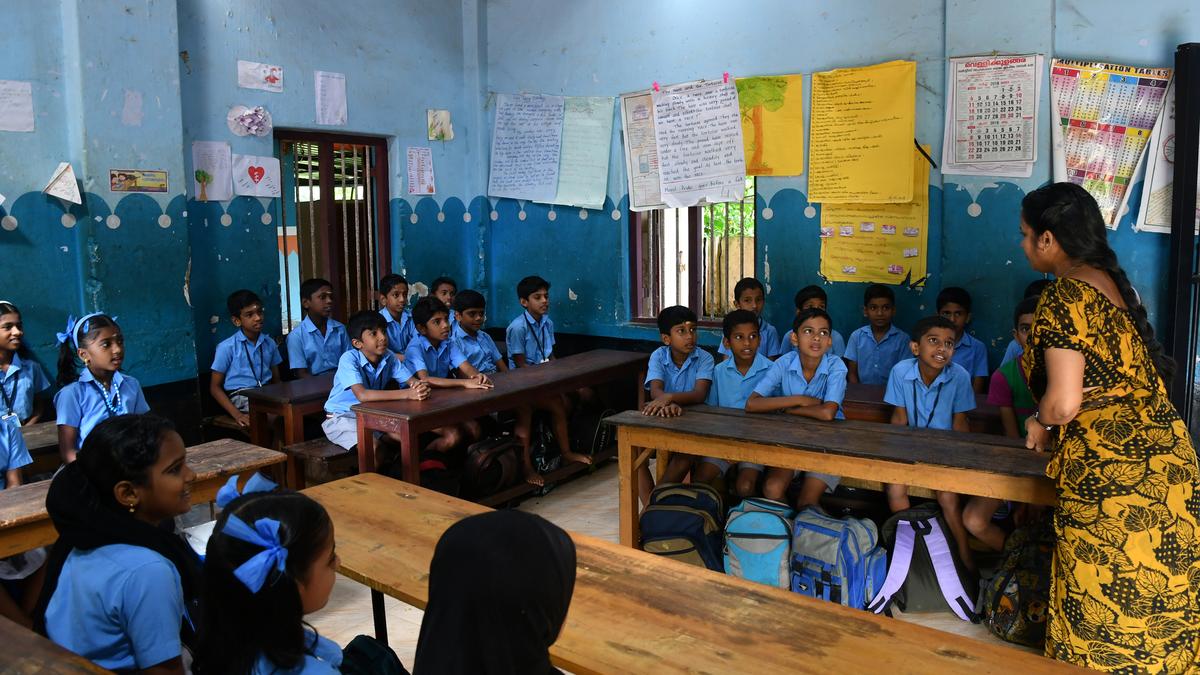
Prevention of diseases is more cost-effective than treating them. To prevent diseases, we need to provide health education to all schoolchildren. Children need to be educated about healthy nutrition, good hygiene and sanitation, reproductive health, road safety, and on mental health topics.
At this young age, they need to improve their health behaviour and not just their knowledge. The health habits they develop at this age will be maintained as they grow to be adults. When girls become mothers, they will be more educated about their health and advocate this for themselves and their family. Over the long term, the school health education initiative has the potential to reduce MMR ratio, under-five mortality and deaths due to road accidents. At the same time, it can increase life expectancy and immunisation rates.
Finland’s school-based health reforms in the 1970s, which wove lessons on nutrition, hygiene and lifestyle into the curricula, played a central role in reducing cardiovascular disease rates in the decades that followed. In Japan, compulsory health education has been linked to improved hygiene practices and longer life expectancy. A structured and progressive curriculum in India can achieve similar results.
Need for concerted actions
Therefore, closing the SDG gap requires action by policymakers to individual actions. Policymakers need to embed health education in school curricula while simultaneously investing in universal health coverage and primary health care.
All parents have an important role to play in the health education of youth. They can review their child’s school curriculum and determine whether topics on physical, mental and social health are being covered. If not, they should push for it by communicating this to the department of education.
India’s improved SDG ranking is encouraging. But it should not obscure the reality that only 17% of global SDG targets are currently on track to be achieved by 2030. Educating its youth about healthy behaviour, supported by stronger health-care systems, can act as the foundation for sustainable progress. And while 2030 is an important milestone to reach, the true vision lies further ahead — building a healthier and stronger India. A government that devotes its attention to embedding health education in school curricula can help achieve the goal of a Viksit Bharat 2047.
Rahul Mehra is National Representative of India, UNESCO Chair for Global Health and Education, and Executive Chairman, Tarang Health Alliance
Published – September 19, 2025 12:08 am IST