In September 2023, soon after the G77+China Summit concluded in Havana, Cuba, Sri Lanka’s then-President Ranil Wickremesinghe chose to make a stopover in the United Kingdom while returning to Colombo. He had decided to take part in a university event, one in which his wife, Professor Maithree Wickremesinghe, was being honoured. In this connection, he is alleged to have used public funds — which he was not entitled to — to the tune of Sri Lankan rupees 16.2 million, or roughly $50,000. Mr. Wickremesinghe was arrested, in August 2025, for the misuse of public funds, remanded for four days in custody, and later released on bail by a Sri Lankan court.

The readings of the arrest
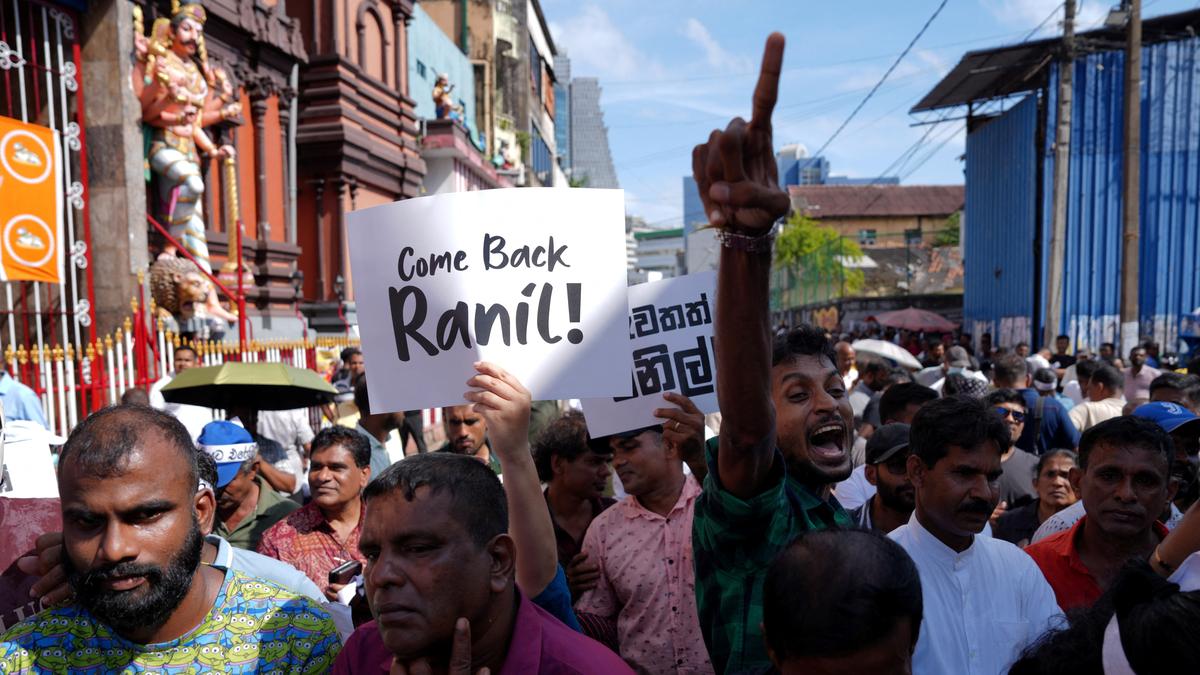
There have been attempts to cast Mr. Wickremesinghe’s arrest as political revenge-taking. Mr. Wickremesinghe is Sri Lanka’s immediate past-President, having run against incumbent President Anura Kumara Dissanayake in the elections in September 2024. At home, Mr. Wickremesinghe’s supporters were vociferous, having even gathered to demand his release on the date of his court hearing on August 26, 2025. Internationally, allies have publicly supported him, with politicians from even India and the Maldives, expressing their consternation at his arrest.
The supporters of Mr. Wickremesinghe focus on the triviality of the charge against him. Surely a head of state is entitled to presidential perks even on personal excursions, they claim. Not even Mr. Wickremesinghe’s legal team disputes that the money he spent on this trip was from the taxpayer; they only argue that he was allowed to spend it.
Perhaps those claims will stand up in court and Mr. Wickremesinghe will be exonerated. But merely having stated that a President is entitled to spend Sri Lankan rupees 16.2 million on a personal trip is, in the context of the island-nation’s current political landscape, embarrassing. The alleged amount could buy a home for a number of people, fund an education for many, start neighbourhood hardware stores, pay off mortgages and debts, or buy boats for fishing. According to data, it would take the median Sri Lankan household roughly 18 years to earn the sum Mr. Wickremesinghe has been accused of misusing. It is on their own terms that Sri Lanka’s public now perceive these expenditures. Fewer concessions are made to the elites.

The demand for accountability
These are political values that had found expression during the mass protests of July 2022 in Sri Lanka. Mr. Wickremesinghe was the Prime Minister then when protesters swarmed his office in the centre of Colombo on July 13. Though there were raucous celebrations minutes after the building was taken over, there were also loud calls made to respect public property. “If we break anything here, we are the ones who will have to pay for it,” protest leaders were heard saying repeatedly. That week, Mr. Wickremesinghe would call these protesters “fascists”.
Mr. Wickremesinghe will have known that the Sri Lankan public harboured deep resentment against the excesses of politicians. In 2015, he had pulled together an unlikely coalition to ride a wave of anti-corruption sentiment, to be sworn-in as Prime Minister. Though that Yahapalana (‘good governance’) government failed, calls for greater accountability persisted. In 2019, Gotabaya Rajapaksa was voted in as the President of Sri Lanka, partially because he was expected to eliminate corruption within the government, even though his central plank was national security. When Gotabaya Rajapaksa’s failures compounded into an economic crisis, the public evicted him in an emphatic manner.
For at least 10 years before Mr. Wickremesinghe’s arrest, Sri Lanka’s public has signalled that the expenditures incurred by politicians must have the spotlight on them. Perhaps the controversy around Mr. Wickremesinghe was just a careless error on the part of Mr. Wickremesinghe, whose house in the centre of Colombo is worth much more than the Sri Lankan rupees 16.6 million he is accused of unlawfully spending. But the public is not longer inclined to tolerate such an act of ‘carelessness’.
The arrest of Mr. Wickremesinghe gives little political ground for the incumbent National People’s Power (NPP) government beyond its showing a willingness to hold even the powerful to account. Mr. Wickremesinghe stood a distant third in the 2024 Sri Lankan presidential election. His party and its allies command just six seats in Sri Lanka’s 225-member Parliament. He was, strictly speaking, largely irrelevant to Sri Lanka’s politics at the time of his arrest, despite his having outspoken backers.
And yet, there is also truth to the claim that the charges against Mr. Wickremesinghe are trivial. There are more serious allegations in the courts of Sri Lanka, such as one that a former Health Minister was the beneficiary of a medicine scam that cost the government Sri Lankan rupees 144 million. Through the course of the mass protests in 2022, claims that plane-loads of foreign currency were flown overseas by politicians had also gained traction.
Apply the same yardstick
The NPP government is taking a huge risk in the arrest of Mr. Wickremesinghe. First, it is in danger of further antagonising what remains of the old political establishment, former Presidents, members of the Rajapaksa family, and Opposition members all having flocked to Mr. Wickremesinghe following his arrest. More importantly, the NPP is also turning the spotlight on itself. If the state charges so eminent a figure over a sum of Sri Lankan rupees 16.6 million, first-time Members of Parliament — the NPP has over 150 members — must be made accountable for every expenditure or risk being accused of hypocrisy. If this is a new line in the sand for Sri Lanka’s politicians, it applies to the NPP the most. The NPP, despite its numbers, is still a political experiment, as far as most voters are concerned. The government has already had to begin investigating two of its own Ministers, over fraud and corruption allegations.
Developing nations are frequently accused of being ‘less-mature’ democracies. In Sri Lanka, the public has radically reshaped its relationship to political power. With luck, it will continue to keep its public servants on a short leash.
Andrew Fidel Fernando is an award-winning author, and journalist based in Sri Lanka
Published – September 22, 2025 01:11 am IST