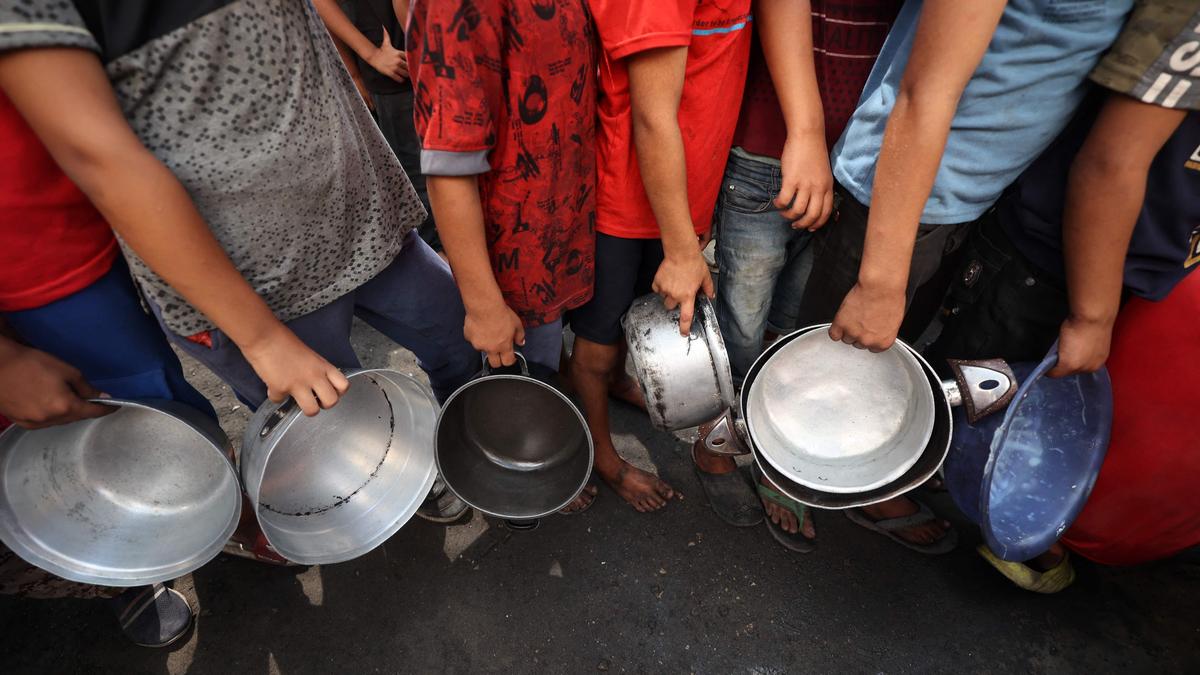
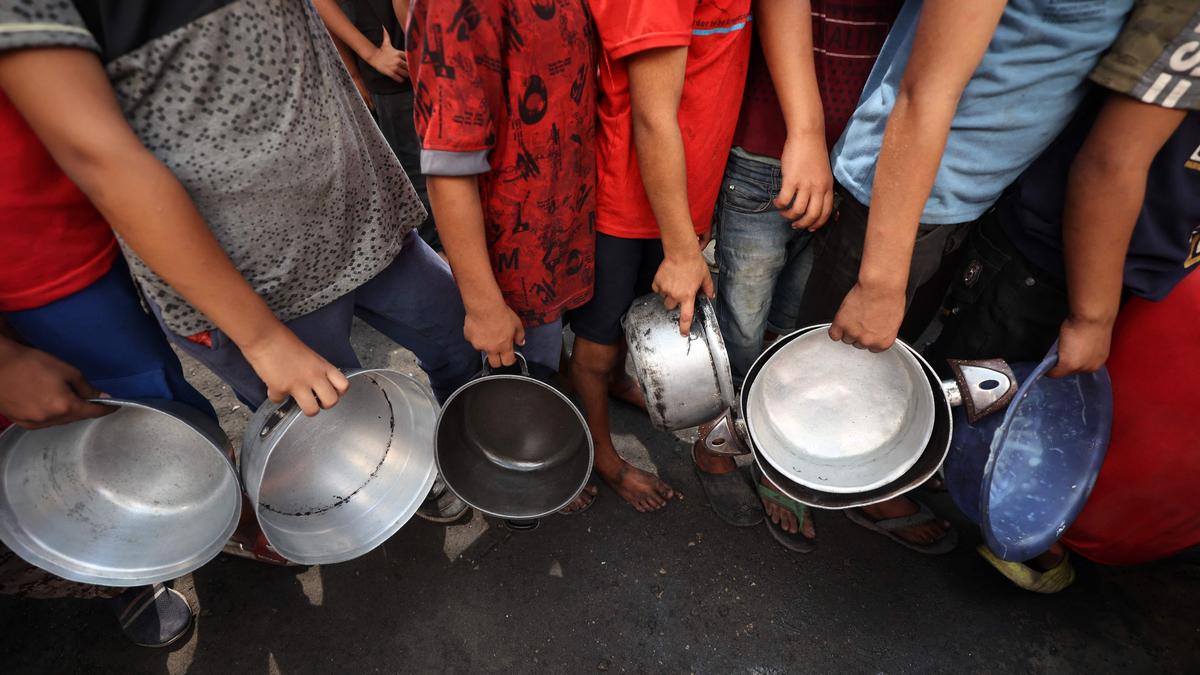
Palestinian children queue in front of a charity kitchen in the Nuseirat refugee camp in the central Gaza Strip on September 14.
| Photo Credit: AFP
From their knee-high world, everything looks upside down. The sky, once a canvas of clouds and kites, now spits fire. Thunder no longer brings raindrops but missiles. Streets, once so familiar, twist into mazes of rubble. For children, war arrives without warning. One day they are in school; the next, in chaos; hungry, afraid, and alone.
The rhythm of life — warm hands at breakfast, the ring of school bell, evening games under fading light — vanishes like breath on glass. The child’s small universe, once stitched together by routines, tears apart at the seams.
Their world shifts in a blink: from the clatter of lunch boxes to the clang of tin roofs in refugee camps, from chalk-dusted hands to bloodied fingernails, from bedtime stories to sirens of death. Until yesterday, violence meant a toy snatched away or a scraped knee. Not this. Not the sky on fire. Not the quiet after an air strike.
Ironies strike hard. The same adults who once scolded them for petty fights now unleash destruction with clinical detachment. And the guardians they trusted to protect them stand helpless. Elders, once oracles of answers, now whisper in fear or stare in silence.
The most haunting images of war are not always fallen buildings or mangled metal; but children. The Standing Boy of Nagasaki, with his dead baby brother strapped to his back, waiting silently at a cremation ground. The Napalm girl from Vietnam, fleeing, arms outstretched like broken wings, her scream scorching the air. These children did not cry for cameras. Their silence has echoed through generations.
Today, the story repeats. Ribs poke through thin skin. Dust-covered faces emerge from collapsed homes, clutching broken toys. Children sit beside the still bodies of their parents.
To a child, war isn’t history or politics. It isn’t strategy or slogans. It is hunger. Pain. Loss. A terrifying game played by grown-ups; without rules, and without mercy. Volumes are written about war; its causes, its costs, its necessity. Adults argue, justify, condemn, even glorify it. But children? They don’t understand provocations or ideologies. They only live the consequences.
Published – September 21, 2025 04:29 am IST