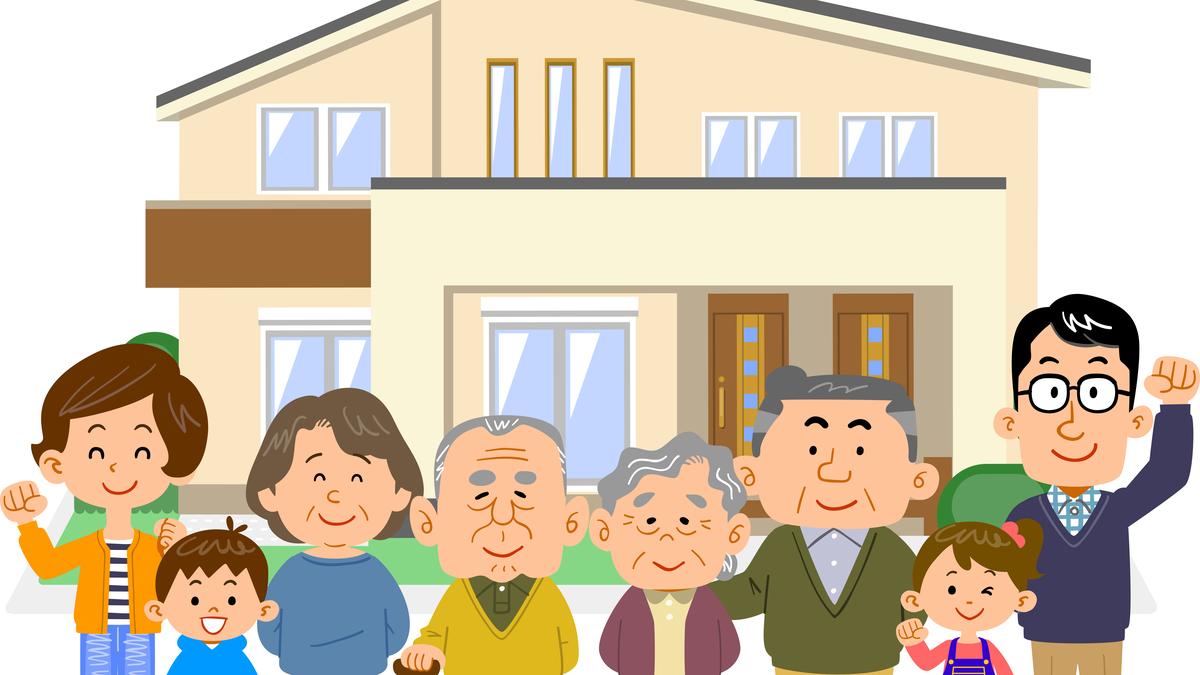
A child curled up in a grandmother’s lap. The aroma of a mother’s cooking filling the house. The sound of an elderly person’s evening prayer blending with the laughter of cousins in the courtyard. This is not just a home — it is a living album of love across generations.
In today’s world, people constantly debate on television, in articles, and online about which is better — a nuclear family or a joint family — arguing, quoting research, and offering opinions. But the real answer often lies not in data, but in experience, emotion, and tradition. A joint family is not just a group of people living under one roof — it is a deep, living bond woven through generations, where values are passed down not through words, but through actions.
Parents must be role models because children watch how they treat their own parents. When a child sees their mother gently feeding her mother-in-law, or their father respectfully listening to his ageing father, those moments become quiet lessons etched in memory. The apple doesn’t fall far from the tree, and children raised in such an environment learn to respect by example, not by force.
Grandparents in a joint family are not just elders — they are sources of unconditional love, patience, and wisdom. Their laps are safe havens where children feel warmth and comfort when parents are away or busy. Unlike strict discipline, they pacify with stories, songs, humour, and gentle words. Their guidance is soft yet powerful, reaching the heart in ways no punishment ever can.
Elders in joint families are also guiding lights during difficult times. When sons or daughters feel overwhelmed or lost, it is the quiet wisdom of grandparents that becomes the light at the end of the tunnel. They don’t impose — they guide. Their advice is born not from theory but from life. They are a treasure trove of wisdom, and their words often arrive exactly when we need them most.
I have seen this power firsthand. When my mother was bedridden, nearing her end, my children were away — but their thoughts were with her. They had grown up bonded to her through years of shared love. And when the final moment came, they returned — not out of obligation, but to offer her the last rites with reverence and affection born of that deep connection.
I also remember the day I got promoted, proud and happy, with thousands of rupees in my pocket. I met my father on the road as he was driving his autorickshaw. I rushed to him and shared the good news, and in return, he gave me a worn 10-rupee note from his shirt pocket as a blessing. That simple note, though small in value, meant more to me than the entire promotion — it was filled with love, sacrifice, and pride. Money may fill the pocket, but moments like that fill the soul.
We must remember: what goes around comes around. Children absorb everything silently, and they will treat us the way they see us treat our elders. There’s a timeless story of a child who preserved the damaged plate his parents used to serve his grandfather — saving it for when his own parents grow old. That act wasn’t cruel — it was innocent, yet deeply revealing. Children don’t need to be told what’s right; they only need to witness it.
So instead of arguing over what is best, we should look inward. In joint families, elders are the glue that holds everyone together. In their presence, children grow into compassionate adults, family ties strengthen, and love deepens. Blood is thicker than water, and in the embrace of a joint family, we don’t just find relatives — we find home, heart, and the lasting spirit of togetherness.
As a teacher, I often conduct debates on the two types of families. Initially, many students vote in favour of the nuclear family, drawn by ideas of independence, space, and modern convenience. But when I share my own heartfelt stories — how my children, though away, rushed back to be with their grandmother in her final moments, how they stood by her side and performed her last rites not out of duty, but out of deep love — and how a simple 10-rupee note from my father meant more to me than my entire promotion, I see a change in them. Their expressions soften. Their hearts begin to grasp what logic alone cannot explain.
By the end of the discussion, many students silently nod, recognising the quiet strength and beauty of joint family life. Their minds may begin with the nuclear family, but their hearts slowly choose the joint family. That’s where my joy lies — as someone who has lived it, felt it, and still stands by it with pride.
Published – September 28, 2025 03:15 am IST